Know whether your project needs Environmental Clearance.
Environmental Clearance is a mandatory regulatory process for applicable projects and is linked to assessment, approvals, public hearing and post-clearance monitoring.
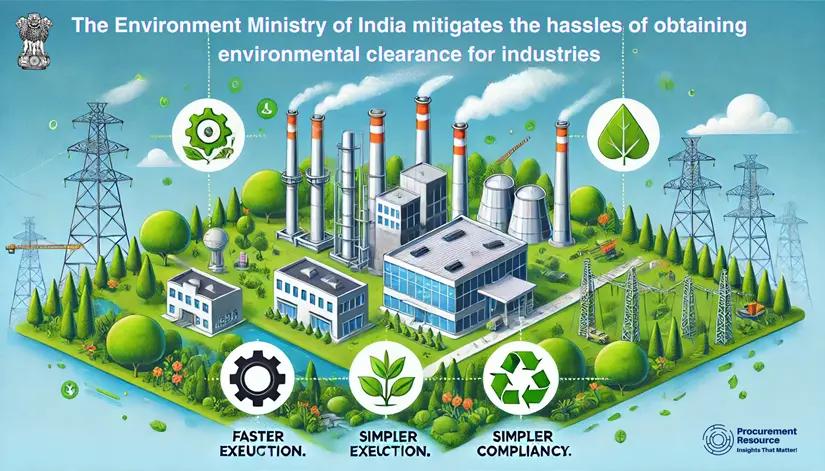
Environmental Clearance (EC) Services for Industrial Projects in Maharashtra
Navigating Regulatory Frameworks for Sustainable Development
What is Environmental Clearance (EC) in India?
A mandatory procedure to assess the potential impact of proposed projects on the environment.
To ensure that developmental activities are done with minimal damage to the ecosystem.
Usually governed by national laws (e.g., The Environment Protection Act).
Required for "Category A" (National level) and "Category B" (State level) projects.
EC Project Categories
The 4 Stages of Environmental
Clearance Process
Environmental Clearance is generally granted through a four-stage process:
Screening
Determining if the project requires an Environmental Impact Assessment (EIA).
Scoping
Determining the "Terms of Reference" (ToR) for the study.
Public Consultation
Addressing concerns of local stakeholders.
Appraisal
Final scrutiny of the application by the Expert Appraisal Committee (EAC).
Environmental Impact
Assessment (EIA)
The Core Document: A study that predicts the environmental consequences of a project.
Baseline Data: Includes air quality, water levels, noise levels, and local biodiversity.
Mitigation Measures: How the project proponent plans to reduce pollution (e.g., ETP plants, green belts).
Public Hearing
Purpose: To involve the people living near the project site.
The Process:
- Notice issued 30 days in advance.
- Chaired by District Magistrate/Collector.
- Comments recorded and included in the final report.
Why it matters: It ensures transparency and social accountability.
Post-Clearance Monitoring
Validity
EC is usually valid for a specific period (e.g., 7-10 years for construction/mining).
Compliance Reports
The project proponent must submit half-yearly compliance reports.
Cancellation
Failure to comply with EC conditions can lead to the withdrawal of the clearance.
Conclusion & Best Practices
Early Integration
Start the EC process during the project's conceptual stage.
Accuracy
Ensure baseline data is scientifically sound to avoid rejection during appraisal.
Sustainability
Treat the EC not as a hurdle, but as a roadmap for sustainable operations.
Environmental compliance is more than one approval.
Map EC, MPCB consent, documentation and continuing compliance together.